Guides
Taking care of your wing
Recommendations to preserve the safety and longevity of your equipment
Regular inspections
Inspect your wing when packing
Especially after incidents: tree landings, barbed wire, water immersion, or lines in the propeller.
Control points
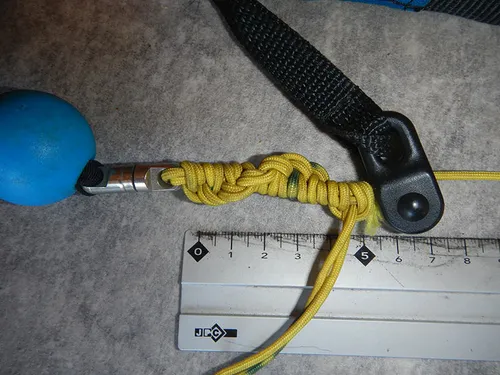
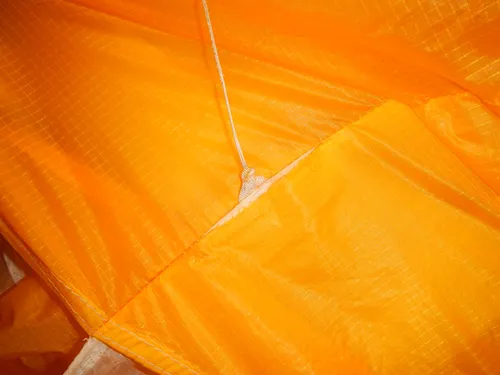
Systematically check risers, lines and all attachment points. Attachment points are the areas that experience the most stress. (see photo)
Protection and storage
How to protect your wing from external damage
Sun exposure
Do not leave your wing unnecessarily in direct sunlight. UV rays progressively degrade the fabric and coating.
Humidity and heat
Avoid the combination of humidity and high temperature. Example to avoid: a wet folded wing in the trunk of a car in direct sunlight during a lunch break. This is very harmful to the fabric and coating.
Common mistakes to avoid
Concrete examples and best practices to preserve your equipment
Brake pulleys and rings
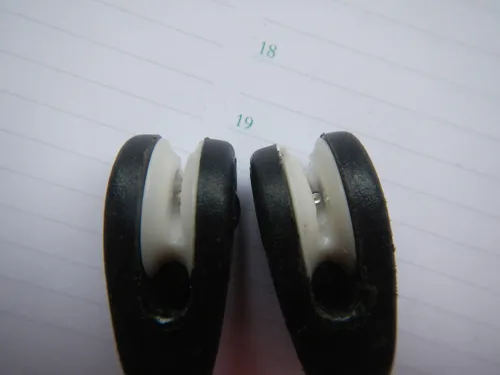
Unsheathed brake lines indicate pulley wear. Regularly inspect pulleys and rings. If a pulley is worn down to the axle, immediate replacement is required.
See photo: pulleys worn down to the axle
Cross inflation not recommended
Cross inflation can cause friction between the brake lines and the risers/lines, wearing or damaging them prematurely.
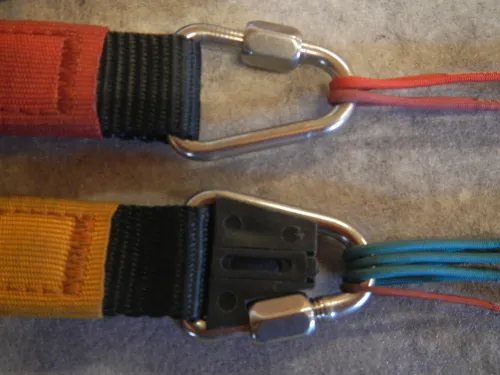
Loose riser maillons
Check the tightness of your maillons before each flight. Tighten firmly but without forcing and replace plastic clips or O-rings if lost.
See photo: bottom maillon loose
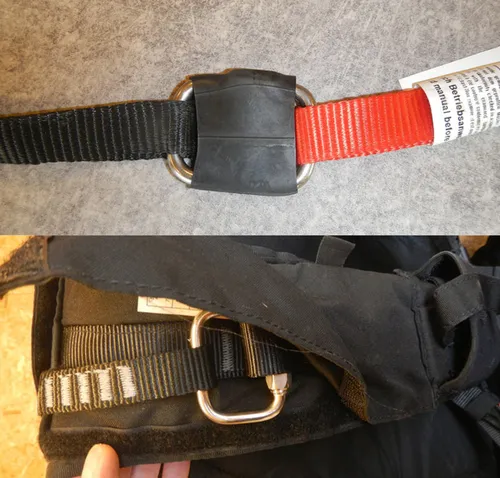
Mispositioned reserve parachute link
Keep the link in the correct position using a piece of bicycle inner tube or O-rings, avoid tape.
See photo:
- Top: correct secured position
- Bottom: mispositioned (reduced resistance in this axis)
Wound brake lines
Never wind around the brake line. Loss of centimetres of brake travel and premature wear. See photo: Brake lines wound over 5cm